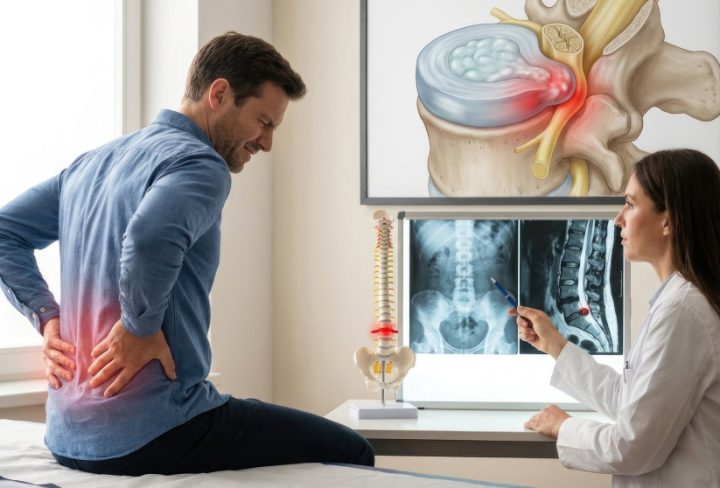
What Is Sciatica?
Sciatica is a type of nerve pain that starts in the lower back. It travels down one leg. The pain happens when the sciatic nerve gets irritated or pressed. This nerve is the largest in your body. It runs from your lower back through your hips and buttocks, then down each leg. Because of this, sciatica nerve pain can feel sharp, burning, or even like a jolt. Sometimes, it can also cause numbness or tingling. For many people, sciatica makes it hard to sit, stand, or walk comfortably.
Common Causes of Sciatica
There are several reasons why someone might develop sciatica. Most often, it happens when something presses on the sciatic nerve. For example, a slipped or herniated disc in the spine is a common cause. Additionally, bone spurs, which are small growths on bones, can press on the nerve. In rare cases, tumors or injuries can also lead to sciatica symptoms. Sometimes, sitting for long periods or lifting heavy objects can trigger or worsen the pain.
Recognizing Sciatica Symptoms
People with sciatica often notice pain that starts in the lower back and moves down one leg. Sometimes, the pain feels worse when you cough, sneeze, or sit for a long time. In addition, you may feel numbness, tingling, or weakness in the affected leg. Not everyone has the same symptoms. For some, the pain is mild. For others, it can be severe and limit daily activities.
How Sciatica Is Diagnosed
Doctors use several steps to diagnose sciatica. First, they ask about your symptoms and medical history. Next, they do a physical exam to check your strength, reflexes, and feeling in your legs. Sometimes, doctors order tests to find the cause of the nerve pain. For example, an X-ray or MRI can show if a disc or bone is pressing on the nerve. In some cases, a CT scan or nerve test may be needed. These tests help doctors choose the best treatment for sciatica.
Treatment Options for Sciatica Nerve Pain
Many people find relief from sciatica pain with simple treatments. At first, doctors often suggest rest and gentle movement. Over-the-counter pain medicines, like ibuprofen, can help reduce pain and swelling. In addition, applying heat or ice packs to the lower back may ease discomfort. Physical therapy is another common treatment for sciatica. Therapists teach stretches and exercises to improve strength and flexibility. Sometimes, doctors may give steroid shots to reduce swelling around the nerve. In rare cases, surgery may be needed if other treatments do not work or if there is severe nerve damage.
Lifestyle Tips and Prevention Strategies
There are steps you can take to lower your risk of sciatica. First, keep your back strong by staying active and doing regular exercise. For example, walking, swimming, or yoga can help. Always use good posture when sitting or standing. If you lift heavy objects, bend your knees and keep your back straight. In addition, try not to sit for long periods without moving. Maintaining a healthy weight can also reduce pressure on your back and nerves. These habits may help prevent sciatica or stop it from coming back.